
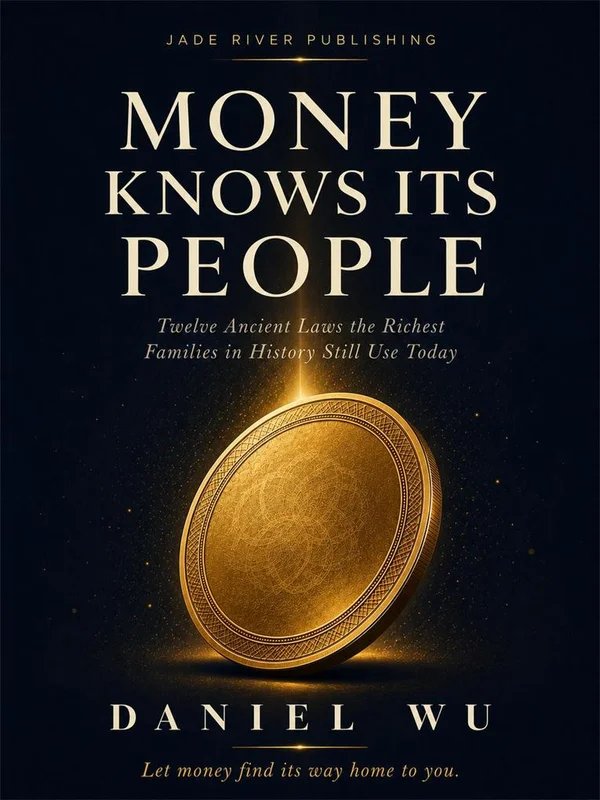
Description
:
Why the Jews?
They are 0. 2% of the world’s population – yet hold 22% of all Nobel Prizes, a quarter of the Forbes 100, seven of the eight original Hollywood studios, and nearly every „too big to fail“ name on Wall Street. Expelled from country after country for two thousand years, they kept becoming the richest minority in every land they reached. How?
This book skips the magical-realism version of „Jewish wealth“ and peels back the legend to look at what’s actually inside. Drawing on the Talmud, the archives of the Rothschild, Guggenheim, and Warburg dynasties, and the lives of Howard Schultz, George Soros, Larry Ellison, Sergey Brin, and Michael Bloomberg, the author distills twelve laws of wealth – each rooted in a specific Talmudic passage, illustrated by a real case, and translated into a practice you can start this week.
Inside you’ll find:
· What the Talmud actually says about money – and why poverty is not a virtue (Pirkei Avot 4:1)
· How the Rothschilds built a five-city private intelligence network 200 years before the internet – and how to build your own
· The 78/22 Principle, written in the Talmud 1, 700 years before Pareto
· The risk math behind Soros’s $10 billion bet against the Bank of England
· How the Warburgs quietly moved 90% of their assets out of Nazi Germany over five years before Kristallnacht
· Why so few Jewish dynasties fall to the „three-generation curse“ – and the rituals that prevent it
A closing appendix offers 50 Jewish maxims on wealth in Hebrew transliteration, English translation, and commentary – including Hillel’s three eternal questions that hang on the wall of the Israeli Prime Minister’s office.
For readers of The Psychology of Money, Atomic Habits, and The Richest Man in Babylon who want the system that came before all of them.
You don’t need to become Jewish. You just need to become the kind of person money wants to stay with.
Turn the first page. Find your portion.
Author Biography:
Daniel Wu writes on thinking, business strategy, and personal growth. This book is the product of many years of reading, observation, and lived experience. He believes that teaching more people to think from first principles is one of the quietest and most consequential changes possible in our time
Reviews
There are no reviews yet.