
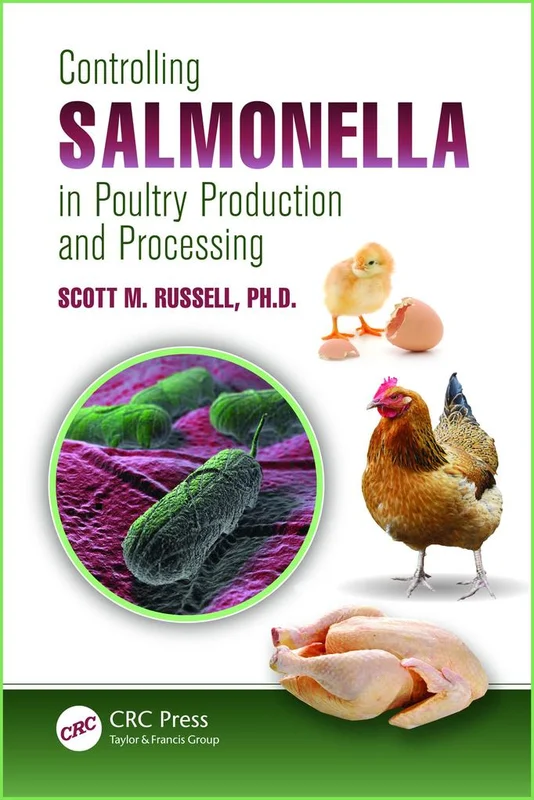
Description
Salmonella is a major pathogen that can result in deadly foodborne illness. The Centers for Disease Control and Prevention (CDC) estimates that there are 1. 4 million cases of Salmonella poisoning each year in the United States from a variety of causes, with undercooked poultry and eggs being the prime culprits. Therefore, intervention strategies are vital to reducing its occurrence. Controlling Salmonella in Poultry Production and Processing provides a complete analysis of the challenges faced in controlling Salmonella in this industry and keeping the public safe from this threat.
Author Scott M. Russell, Ph. D. , works closely with the poultry industry throughout the United States and Canada and with companies in Central and South America, Europe, and China. In this volume, he explores:
- The origin of Salmonella in poultry
- Intervention strategies for controlling Salmonella during breeding, hatching, grow-out, transportation, and processing
- How to design a processing plant to eliminate Salmonella
- How to verify intervention strategies to ensure they are working
- Increasing yield during processing while controlling Salmonella
- New regulations being proposed by USDA-FSIS and their impact on poultry companies regarding competition and international exportation of products
- The differences between the EU and the U. S. with regard to Salmonella control
Providing readers with numerous examples of real-world experiences, Dr. Russell offers knowledge gleaned from traveling to poultry plants throughout the world over an 18-year period, assisting processors with identifying the sources of Salmonella in their operations, and developing successful intervention strategies.
?
Reviews
There are no reviews yet.